
EF Portal 2026.1 is out with the new Application Service Launcher, a unified Admin/User interface, theme support and a first preview of agentic Active Insights!
We’re proud to announce the release of EF Portal 2026.1, now available for deployment.
This release is about making EF Portal easier and more enjoyable to use every day. Users get a faster, more personal way to reach their applications, and administrators get one consolidated view of everything running on their environment. A first look at Active Insights also shows how agentic assistance can help both groups get more out of their HPC and VDI infrastructure.
What’s new in 2026.1 in a nutshell:
EF Portal 2026.1 puts everyday usability first: a launcher and interface that get users to their applications faster, a single view for administrators, and a first look at agentic assistance built for real HPC and VDI environments.
Transition to EF Portal
If you’re using EnginFrame, it can be very beneficial transition to EF Portal, the next evolution of the powerful HPC and VDI portal platform. Built on the same code base as EnginFrame, EF Portal offers a familiar installation process, consistent user experience, and exciting new features designed to enhance productivity and performance. As part of NI SP’s commitment to supporting EnginFrame customers, we offer free migration options and ongoing support to ensure a seamless upgrade experience.
Ready to try EF Portal or upgrade EnginFrame to EF Portal? Contact us for support.

Upgrading to EF Portal 2026.1
EF Portal upgrades are non-disruptive: running jobs and active DCV sessions remain unaffected throughout the process. For a smoother upgrade process, you can refer to our dedicated upgrade guide for validation steps, dry-run best practices, and handling of customised files.
⬇ Read full “What’s New in EF Portal 2026.1” below ⬇
What’s New in EF Portal 2026.1
(PDF Version: What’s New in EF Portal 2026.1)
Application Service Launcher
This release introduces the new Application Service Launcher, a centralized interface that consolidates access to all authorized application services into a unified, tile-based grid. By default, users can manually enable this feature from the User’s Settings menu to replace their standard navigation. Once active, the grid layout allows users to freely reorder tiles using drag-and-drop actions to better fit their workflow, while each tile is automatically tagged based on the service’s group.
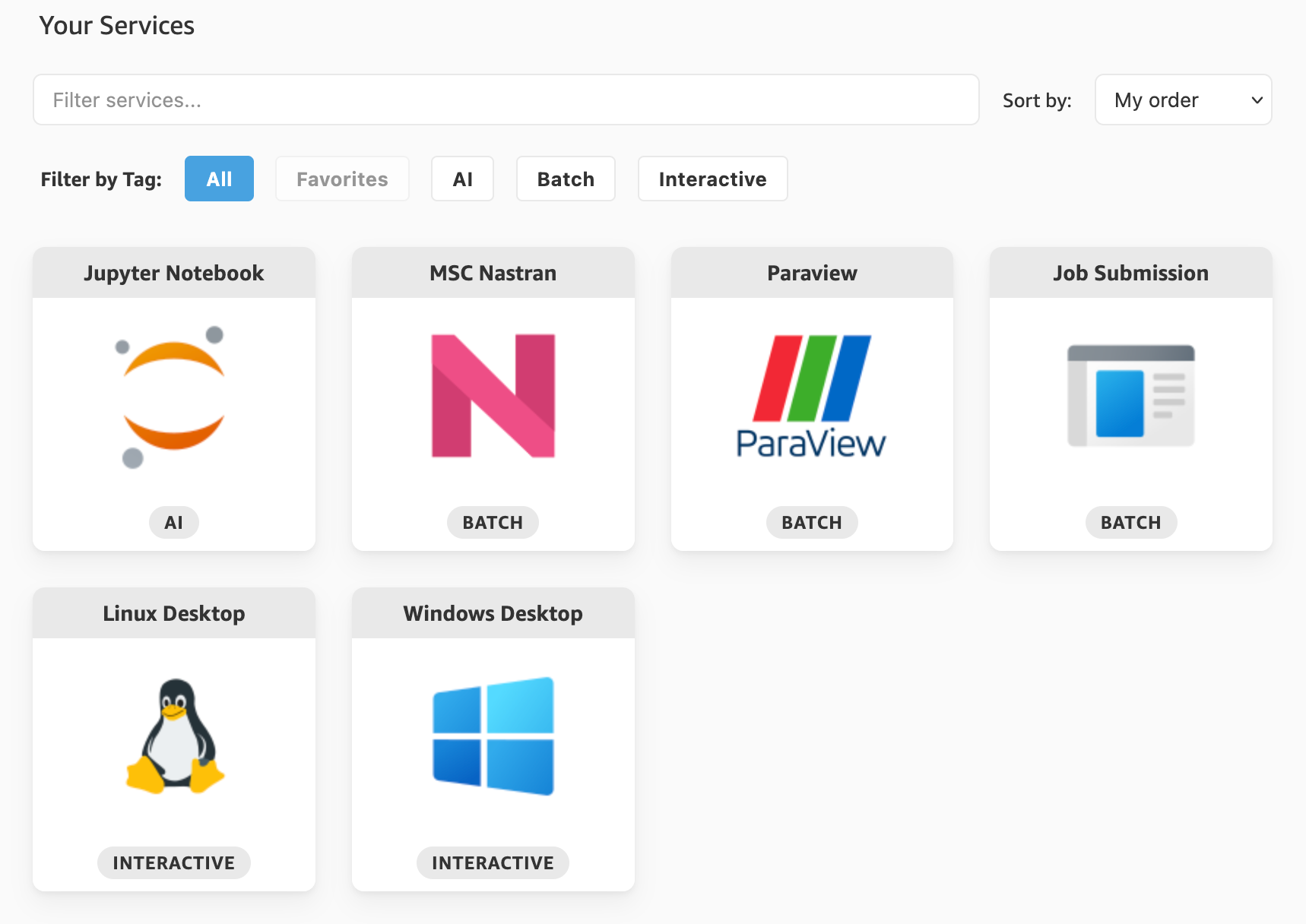
Users can also access additional tools directly from the grid; hovering over a service tile reveals dedicated action icons to mark the service as a favorite or to view its description.
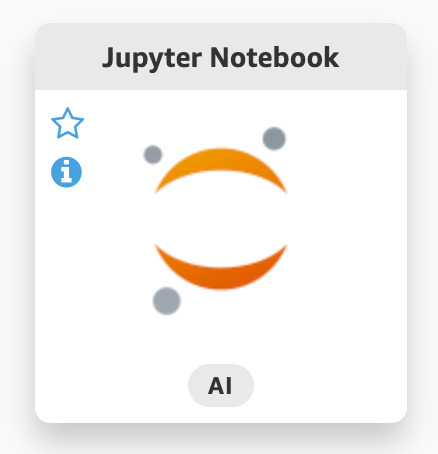
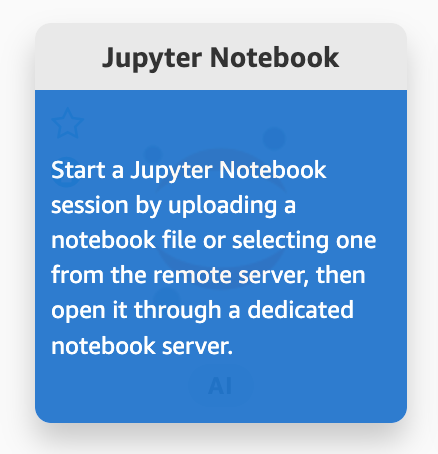
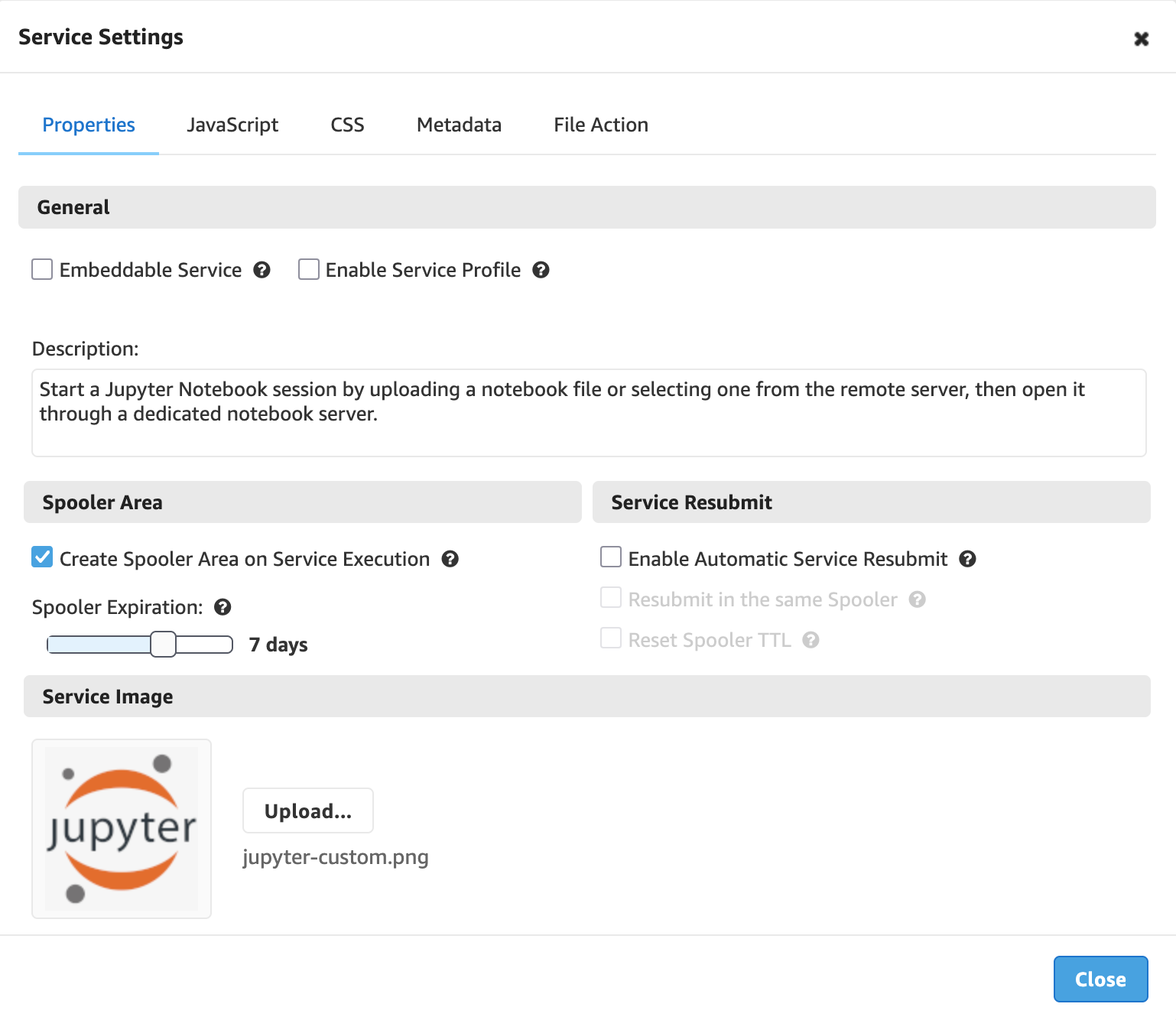
Visually, the system automatically applies a guessed image to each tile for immediate recognition, though administrators can later overwrite these defaults with custom graphics and customize the service description within the Service Editor.
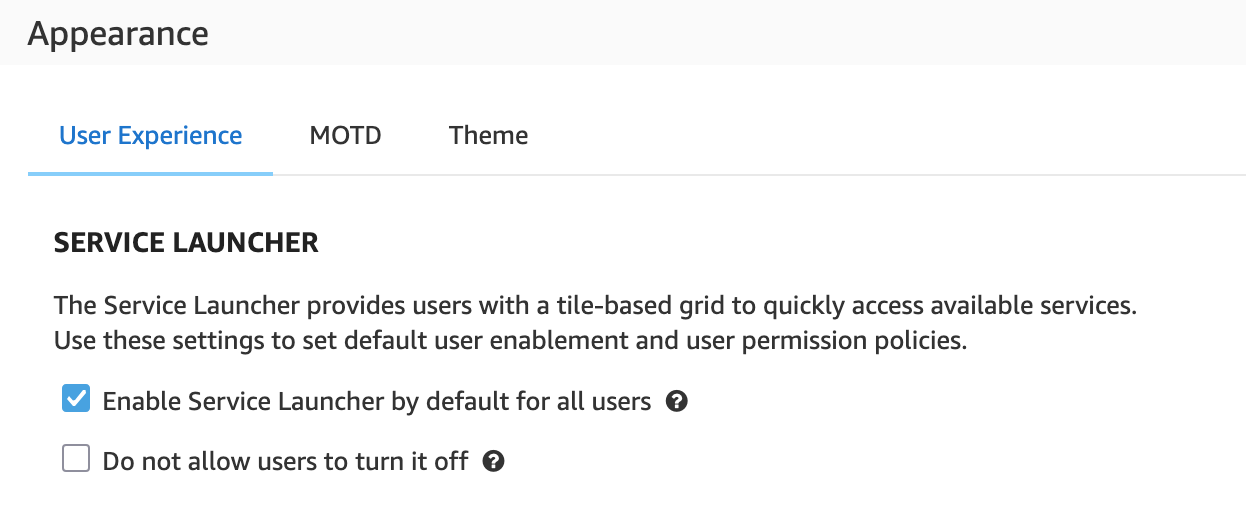
Administrators have extensive control over the deployment of this feature, managing these options via the User experience tab within the Appearance service. From there, they can choose to opt-in the Service Launcher by default for all users, while still allowing individuals the choice to turn it off in their personal settings. Alternatively, administrators can make the feature mandatory across the organization, which deploys the tile-based grid to all users and removes the option to disable it from the User’s Settings menu.
Unified interface for Admin and User view
Admin and User views in HPC Workspace and Virtual Desktop portals have been unified into a single interface.
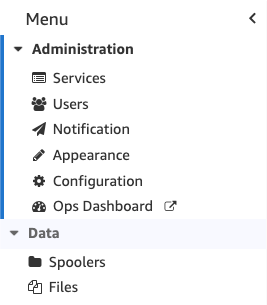
Admin users can now access all services from one consolidated view, with a simple toggle to switch between all sessions/jobs and their own.


Theme Support
Added support for user‑controlled UI theme switching, now offering Black and Sepia themes in addition to the default refreshed NI SP theme.
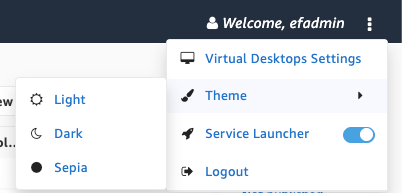
Themes can be customized by the administrator through the CSS in the Appearance configurator.
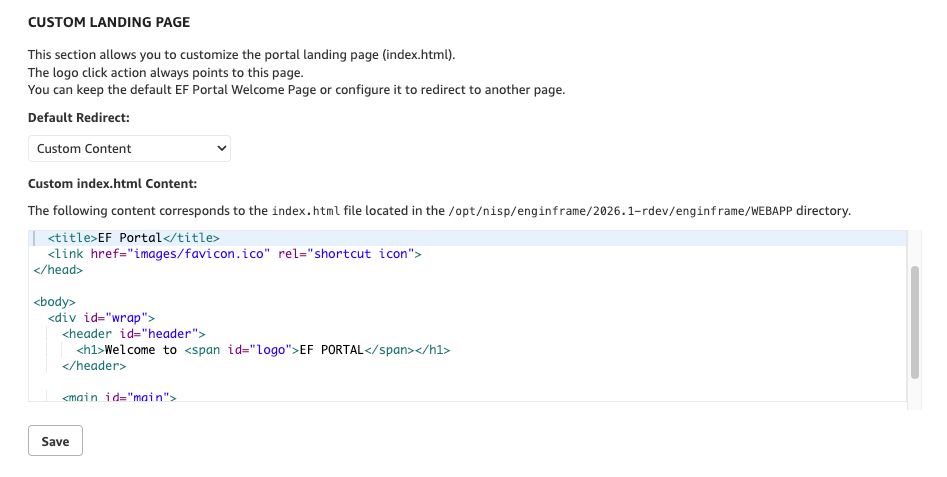
Configurable Landing page
Added the ability to customize the default landing page shown at startup and referenced by the logo link.
You can redirect to EF Portal Welcome Page, HPC Workspace portal, Virtual Desktop portal or a custom Plugin.
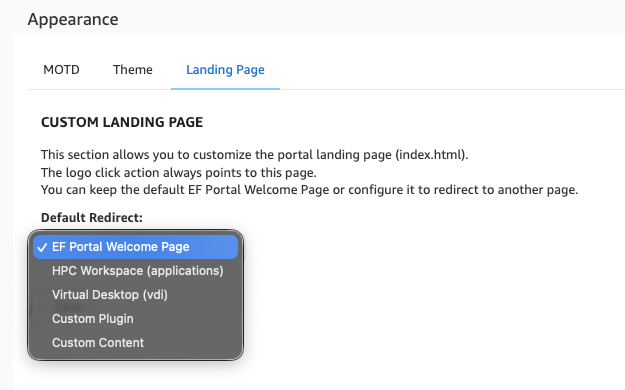
Alternatively you can configure your custom HTML landing page.
Preview of Active Insights
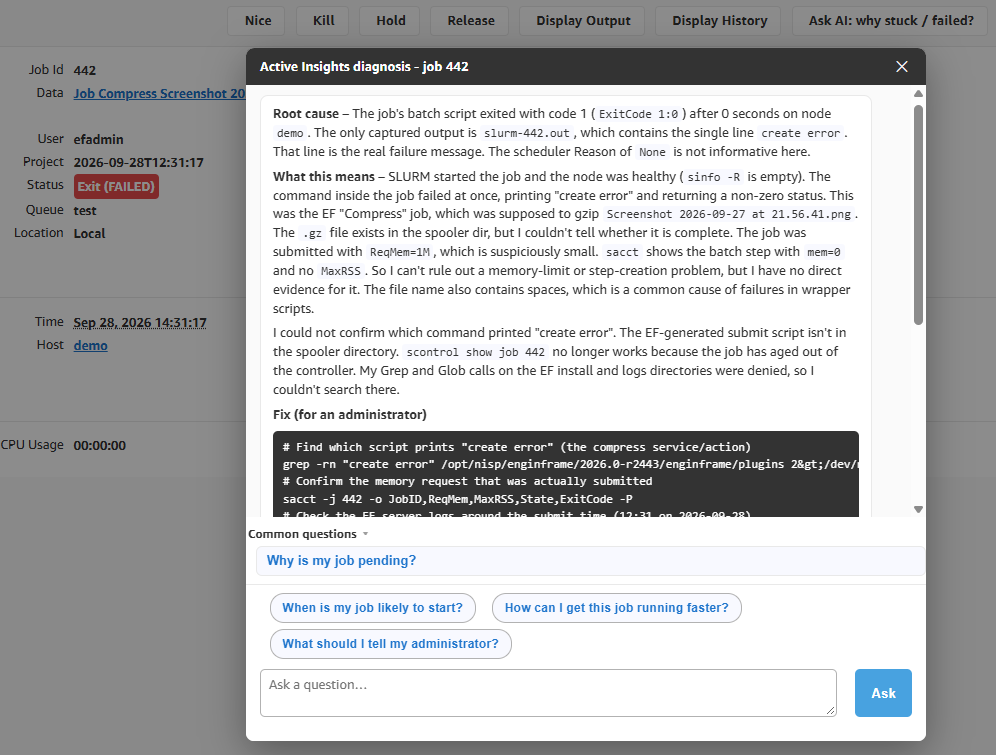
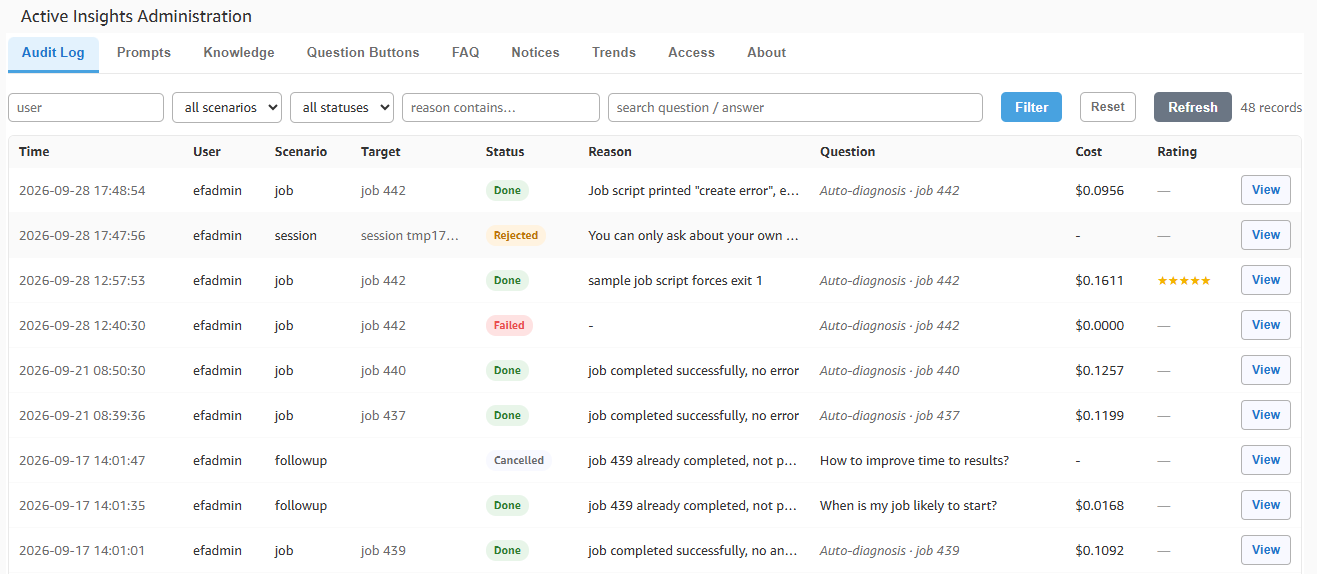
With the new version EF Portal 2026.1 we offer a preview of the new agentic capabilities that allow administrators and users to ask questions about their jobs, sessions, or system to improve the overall usage and experience of the HPC environment. A dedicated administrator dashboard allows interaction monitoring, knowledge base management, cost analysis and trend tracking
Active Insights response to a user querying why the job failed:
Active Insights Dashboard allowing the administrator to monitor queries, ratings of answers, adapting prompts, adding knowledge, adding information to FAQs, understanding trends and controlling access:
Additional new features
- Web Terminal: Added support for passwordless SSH. When enabled, each user gets their own on-demand Web Terminal server process, started with their own OS identity instead of the shared service account, so their own SSH keys can be used to connect without a password prompt
- VDI: Added support for VNC interactive sessions using TurboVNC
- Installation on Linux ARM (aarch64) architecture is now supported. Web Terminal and Proxy support for ARM are available on request
Enhancements
- Added support for Java 17, 21 and 25
- Added support for Red Hat 10
- Added support for Ubuntu 26
- Added support for SLURM 24.x, 25.x and 26.x
- Simplified the installer workflow to reduce the number of manual steps required. To enable advanced mode, pass -Dadvanced=true when launching the Java installer command
- Optimized performance and responsiveness, especially on slow filesystems
- Improved database access performance, especially on slow filesystems
- Improved file caching logic to reduce disk I/O and improve performance
- Improved notification read-receipt caching on slow or overloaded hosts
- Added a UI activity monitor to track user interactions and pause automatic component refreshing when the user is idle. This improves overall server performance, ensures proper web session timeouts, and optimizes EF Portal license management
- Increased installer speed by optimizing the internal report-creation process
- File Manager: Added allowlist validation when downloading ZIP archives
- File Manager: Introduced validation of deny-list paths configuration when compressing and downloading multiple files
- File Manager: The global Download action (compression and download) can now be configured to abort when the projected disk usage after compression exceeds the administrator-defined free-space threshold
- File Manager: Improved disk-space management when using the S3 backend, with automatic cleanup of local spooler copies after ZIP creation completes
- File Manager: Administrators can now set file upload and download limits, and also customize the HTML messages shown when these limits are exceeded. Setting a limit to zero disables the related feature
- File Manager: Administrators can allow users to view hidden files
- Service Editor: Redesigned the Settings dialog layout for better usability
- Service Editor: Added support for viewing service details even when the service is locked for editing
- Service Editor: The “Save Draft” and “Revert” actions are now contextually enabled only when modifications are present
- VDI: Improved interactive session diagnostics by propagating detailed error messages from scheduler and session hooks directly to the user interface
- VDI: Session hook scripts can now propagate error messages to the user interface using standard error (stderr)
- VDI: Improved interactive session diagnostics by adding comprehensive informational logs related to credential-update operations
- VDI: Added configurable limits for DCV log retrieval and rotation of interactive session logs
- VDI: Support searching across all column values in the List Sessions page
- VDI: Added a configuration option to disable session sharing for all users
- VDI: Prevent NullPointerException when retrieving DCV Session Manager screenshots
- VDI: Added the Session Debug Info button to the Session Details page for regular users.
- VDI: Added a configuration option to control screenshot refresh intervals in environments (DCV SM, some LSF setups) where the session spooler is not shared with the execution node, reducing unnecessary impersonation bursts
- DCV Session Manager Integration: correctly propagate the host requirement provided through the vdi.launch.session script
- DCV Session Manager Hosts page now displays the GPU model by default instead of swap usage. Host details displays IP address, logged users, and, when present, AWS EC2 details: instance type, instance id, image id
- Applications / VDI: Login now shows a license error if the license is outdated
- Slurm Plugin: Improved interactive job submission to prevent jobs from being requeued in a new host
- Slurm Plugin: Added the ability to define a default job time limit and account when not configured in the service
- Preserve the current session sorting when filtering search results
- Improved Actions menu positioning to ensure it remains correctly anchored when the table reloads asynchronously
- Spoolers: Added configuration flags to control the display of Job ID, Job Name, and Items count columns in the Spoolers List table
- Notifications: Added search box to the notifications panel with filtering and match highlighting
- Web Terminal: Added wildcard support to the host allowlist configuration
- Statistics: Added a configurable interval for filesystem updates to reduce overhead on slow shared filesystems. Administrators can adjust how often filesystem information is retrieved
- Authentication: Improved support for HTTP authentication by adding a configurable option to control whether the mapped user must exist as a local system account, enabling SSO access for users without local accounts
- Authentication: Introduced a configurable mechanism to retrieve the user’s real name at login time
- Word Cloud: added support for multi-select filtering and improved synchronization with the table refresh logic
- Installer: preserve and display database configuration when using an existing configuration file for Enterprise installation
- Added native MariaDB support: jdbc:mariadb:// connection URLs are now recognized and mapped to the MySQL dialect
- Added a check for the JDBC database connector in the ‘enginframe’ startup script when an external database is configured
- Improved ‘enginframe’ startup script to avoid failing when a lock file is associated with a correctly running process
- EF Tokens: token storage relocated to the global data folder with enforced secure permissions
- Export variable EF_REST_REQUEST set to true when making a REST call
- Prevent transient errors at authorization configuration reload
- Logging now uses SLF4J with a Logback backend. Logging from bundled libraries – via SLF4J, Log4j 2 (Log4j-to-SLF4J bridge), or Apache Commons Logging (jcl-over-slf4j bridge) – is routed into the centralized EF Portal logs
- Removed usage of the tempfile command from the utilities functions
- REST API: Improved HTTP return codes to be consistent across endpoints
Changes
- Discontinued support for AWS Batch
- VDI: Interactive sessions in the Closing state are excluded from the Active filter for standard users
- Migrated all script shebangs and script-generation logic to bash
- Web Terminal: Empty host-allowlist now implicitly allows all hosts
- Web Services have been removed from the codebase. Use the REST API to programmatically interact with EF Portal
- Discontinued support for Upload Java Applets and File Catalyst integration
- User registration at login now falls back to EF_USER as the real name when the system user database has no corresponding entry
- Removed EF_WEBSERVICE_REQUEST from the codebase, if your code was using this variable then switch to the new EF_REST_REQUEST being set for REST calls
- AWS HPC Connector plugin: HPC triggers are now disabled by default. They must be manually re-enabled when using the HPC plugin
- Operational Dashboard: Set Search as the default tab in the Log File Viewer to have an immediate overview of potential problems
- Added Guice Injection 5.1.0
- Upgraded Apache Tomcat to version 9.0.122
- Upgraded rrd4j to version 3.10
- Upgraded Node.js to version 26.3.0
- Upgraded Node.js modules used by Web Terminal and Proxy
- Upgraded Apache commons-lang3 to version 3.20.0
- Upgraded Apache Commons IO to version 2.21.0
- Upgraded Apache CXF to version 3.6.12
- Upgraded Apache Neethi to version 3.2.3
- Upgraded Apache Log4j to version 2.26.1
- Upgraded C3P0 to version 0.14.1
- Upgraded AWS SDK to version 2.54.1
- Upgraded JFreeChart to version 1.5.6
- Upgraded MyBatis to version 3.5.19
- Upgraded Gson to version 2.14.0
- Upgraded Google Guava to version 33.7.1-jre
- Upgraded Jackson JSON library to version 2.22.2
- Upgraded Swagger JAXRS2 to version 2.2.53
- Upgraded okhttp to okhttp3 4.12.0 for DCV Session Manager plugin
- Migrate from javax.mail to jakarta.mail version 2.x
- Removed FileCatalyst API dependency
- Removed AXIS2 dependency
- Removed Tuckey URL Rewrite Filter dependency
- Removed Xerces2-J dependency
- Removed DiME (Data Internet Message Envelope) parser dependencies
- Removed Eastwood Chart dependency
- Removed NanoWar dependency
- Removed NanoContainer dependency
- Removed PicoContainer dependency
- Removed Avalon Framework dependency
- Removed Excalibur Logger dependency
- Removed Avalon Logkit dependency
Fixes
- File Manager: Fixed an issue where pressing ‘t’ failed to toggle the places history overlay display
- Service Editor: Fixed a race condition and potential service issues when updating a published service
- Updated Derby Server Policy for full compatibility with SLES 15
- VDI: Corrected pagination handling for DCV Session Manager Hosts, ensuring all hosts are retrieved when the total exceeds 1000
- Slurm Plugin: Corrected handling of job completion time from accounting data
- Slurm / PBS Plugins: Fixed an issue where submission dir setting was ignored during batch job submission
- Fixed an issue where the Actions menu could jump to the top of the table during a list refresh
- Configuration Manager: Fixed the color displayed for the number of valid settings after correcting an invalid value