AWS has ended development of Research and Engineering Studio (RES), and its official end-of-support notice names EF Portal as an alternative for teams moving off it. If you run RES today, you have until AWS support ends (September 30, 2027 for the final release, earlier for older ones) to test how EF Portal fits your deployment.
What AWS announced
On September 29, 2026, AWS published its end of development notice for RES, with a companion post on the AWS HPC blog. The facts that matter for planning:
- September 29, 2026: RES 2026.09 is the final release. RES is closed to new adoption, and no new features or versions will follow.
- September 30, 2027: AWS support for 2026.09 ends, including fixes for critical issues. Earlier releases reach end of support on their own dates, set by AWS’s RES support policy.
- Nothing is switched off. RES is open source (Apache 2.0) and runs in your own AWS account, so existing deployments keep running, and after support ends you or a partner maintain it.
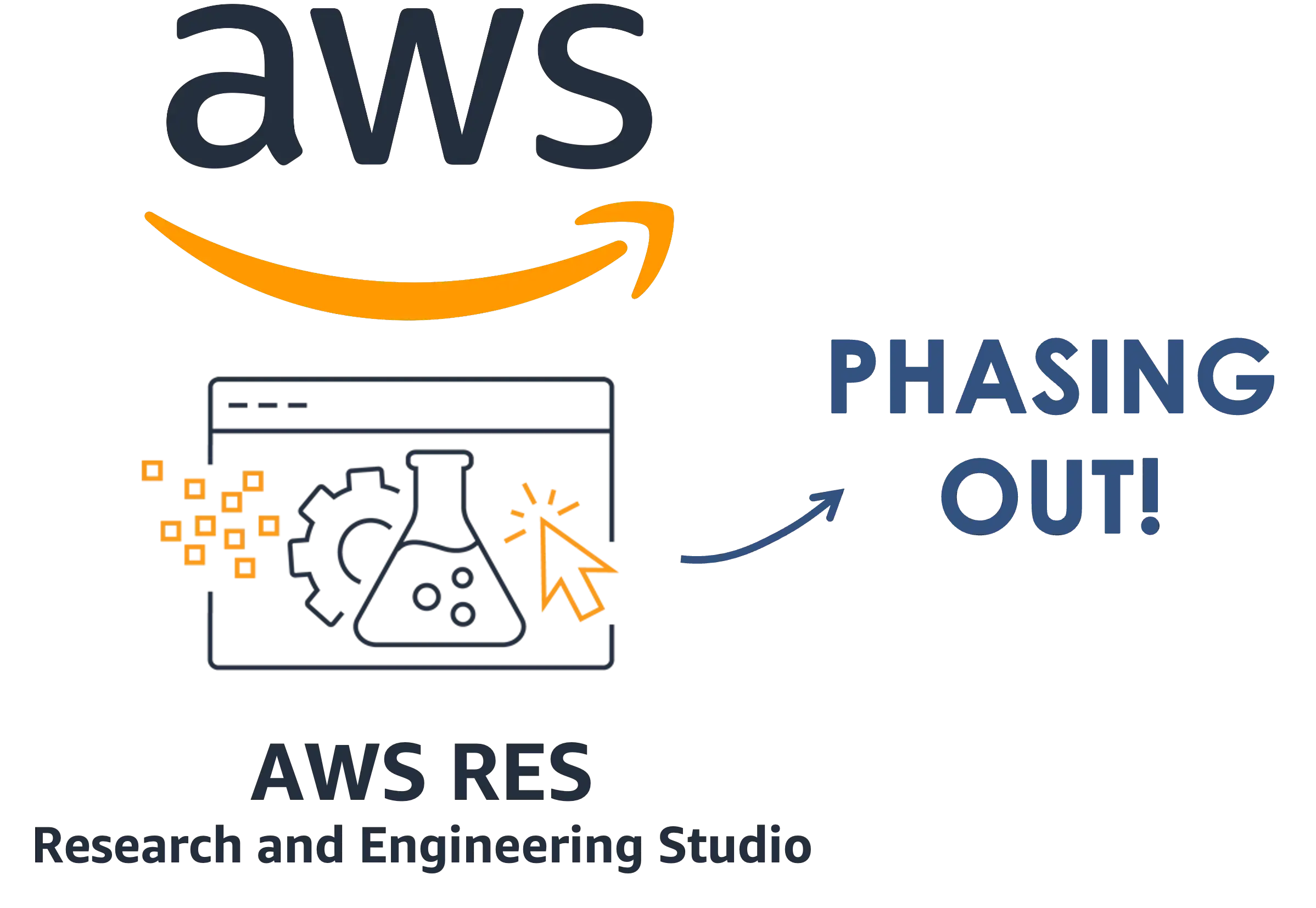
AWS lists three routes:
- You can keep running RES yourself or with an AWS partner.
- You can move to an AWS managed service (Amazon WorkSpaces, Amazon WorkSpaces Applications, or Amazon DCV login nodes on AWS Parallel Computing Service), which AWS says are not drop-in replacements for the RES portal.
- Or you can move to “an alternative product, such as NI-SP EF Portal”.
AWS also confirms that Amazon DCV, EC2, EFS, FSx and AWS Directory Service are unaffected.
Where EF Portal fits
EF Portal is an HPC portal first: it submits and monitors batch jobs on SLURM, PBS, LSF, Altair Grid Engine and Gridware, and it launches interactive desktops on Linux or Windows through native DCV integration, so batch and interactive work share one portal.
RES gives users a browser portal with Windows or Linux virtual desktops, shared file systems assigned to projects, sign-in with corporate credentials and built-in usage telemetry.
Here is how the rest line up:
| What RES provides | What EF Portal offers |
|---|---|
| Windows and Linux virtual desktops | Interactive sessions on Linux or Windows through native DCV integration, managed from the same portal |
| Sign-in with corporate credentials | MFA, Entra ID and other identity providers, plus LDAP, Active Directory and PAM |
| Shared file systems for project data, assigned by administrators | File Manager with file, SSH and S3 locations, where users organize their own EF Places (2026.0) |
| Built-in telemetry for usage and troubleshooting | Operational Dashboard covering server load, JVM usage, licenses, storage, and active sessions and jobs, with CPU and JVM widgets that span every server in Enterprise installations (2025.2), plus a Log File Viewer with cross-file search |
Session hooks let you attach your own scripts to the session lifecycle, for example to power a VM on before a session starts and off when it closes.
What EF Portal already does on AWS
Because RES runs on AWS, here is what EF Portal already offers there:
- Amazon DCV, which AWS confirms is unaffected by the RES announcement, is integrated natively.
- The File Manager reaches S3 locations and remote spoolers on S3, with built-in data preview.
- Sample pre-submit and closing hooks manage AWS WorkSpaces Core instances, start DCV sessions on Windows (Office 365 included) and shut the instances down when the session closes (2025.2).
- The DCV Session Manager host details show the EC2 instance type, instance ID and image ID when present (2026.1).
Our HPC Services team builds further on top of that for enterprise deployments, and three recent builds are public. A region selector shows load and reserved capacity across clusters, including AWS On-Demand Capacity Reservation (ODCR) instance types. Queue governance can route standard users to queues backed by ODCR instances while power-user groups get privileged queues. And Windows DCV auto-scaling drives the AWS Auto Scaling Group behind the fleet. The three builds article describes each:

Multi-region visibility
See load and reserved capacity across every cluster you run, and switch to the right region in one click.
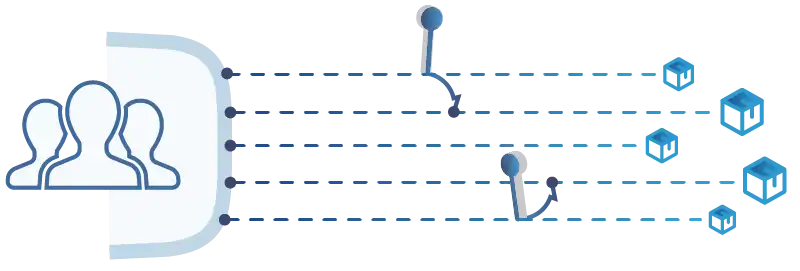
Queue governance
Route user groups to the right queues, and let admins move pending jobs between queues in one action.
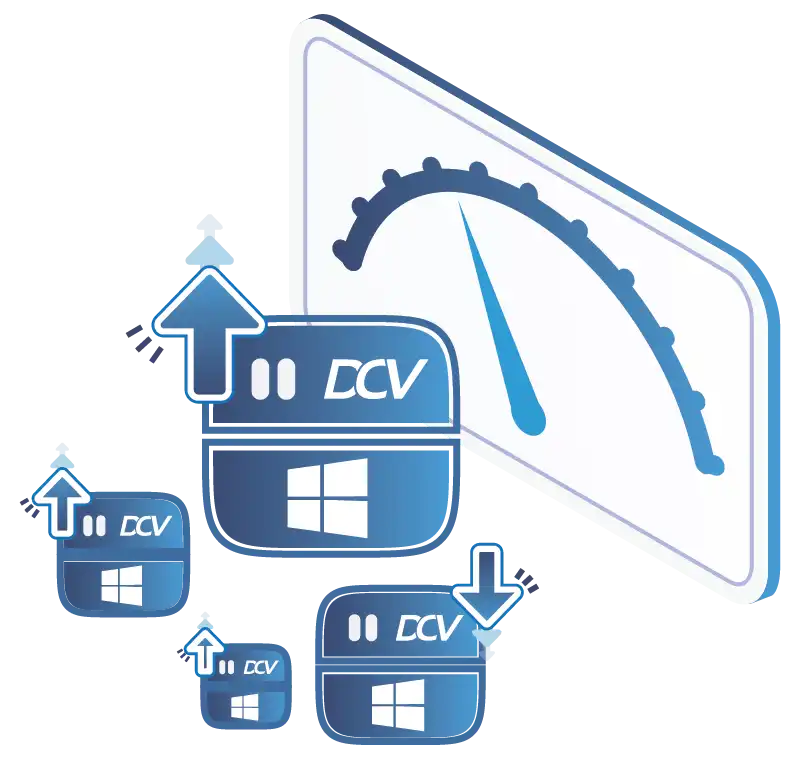
Windows DCV auto-scaling
Scale the Auto Scaling Groups behind Windows DCV fleets on real session demand, above a guaranteed floor of persistent nodes.
The harder parts of RES are the ones to map together: projects with per-project access, AMI-based software stacks that administrators assign to them, and per-project budgets. How those translate depends on how you use them, and AWS says its own managed-service options are not drop-in replacements either.
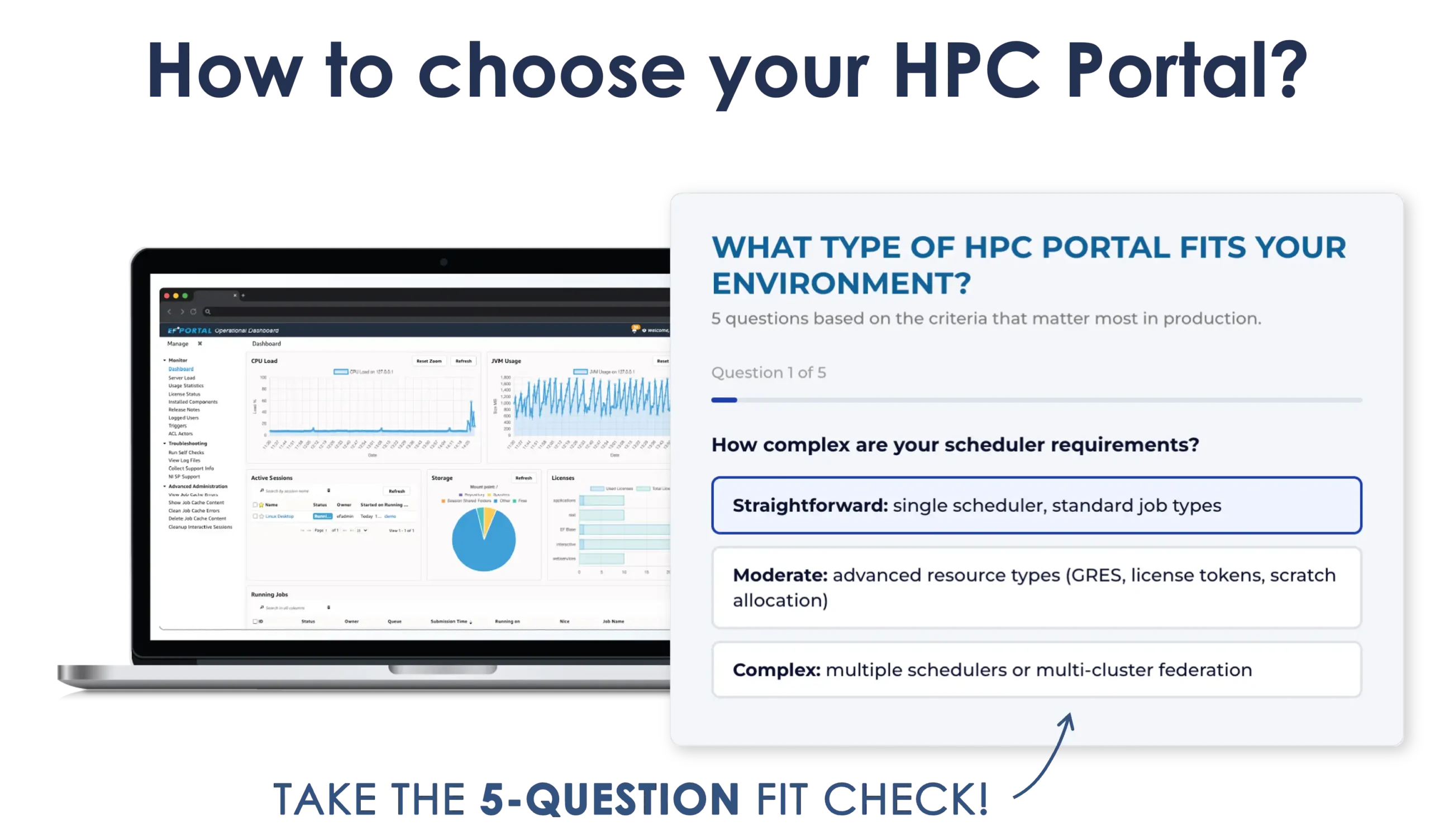
If you are also weighing open source portals, checking out this guide can help you reach a decision:
20+ years of EnginFrame heritage, ADOPTED WORLDWIDE
EF Portal is the continuation of EnginFrame, an HPC portal that has been in production with major industrial companies around the world for over twenty years, and still is actively developed and enhanced today.
In September 2024, when AWS discontinued EnginFrame, NI SP took over its development. We had distributed and supported it for over five years, and the original codebase and existing configurations carried over (the full story).

Development has continued since with many major releases enhancing the Portal’s capabilities. The latest release, 2026.1, shipped on October 5 with a new Application Service Launcher, a unified Admin and User interface, and a preview of agentic Active Insights. Earlier releases added, among other things, an Operational Dashboard, a Web Proxy for web applications on compute nodes, a Web Configuration Editor, real-time notifications and a Log File Viewer.
Test the fit in one week
With end of support about a year away for the final release, there is no need to decide from a feature table.
You can run this instead:
- Write down what your RES users actually do: Windows or Linux desktops, which applications, how many projects, where the data lives, how people sign in, and which budgets you enforce.
- Request the free 30-day evaluation, then stand up a test instance from the ready-to-use Docker container or the two-minute quickstart.
- Take the applications and workflows of one RES project and run them through the test instance for a week. A test instance will not reproduce your AWS desktop images, so treat this as a functional check, and ask us about anything AWS-specific.
- List what is missing or different, and send it to us. That list is the best input for a migration plan, and our HPC Services team can customize EF Portal where it does not match.
Request your free 30-day EF Portal evaluation →
The Enterprise HPC Portal
Or talk to the NI SP team about your RES transition.
Frequently asked questions
Is Research and Engineering Studio being discontinued?
Yes. AWS ended development of RES on September 29, 2026, with 2026.09 as the final release. AWS supports 2026.09 through September 30, 2027, and earlier releases reach end of support sooner. Because RES is open source and runs in your own AWS account, existing deployments keep running after those dates.
Is EF Portal an official AWS replacement for RES?
AWS lists EF Portal as an alternative product in its RES end-of-support options. EF Portal is not an AWS product: NI SP is independent of AWS. AWS also says its own managed-service options are not drop-in replacements for the RES portal, so any route, EF Portal included, deserves a fit test before you commit.
Does EF Portal support Windows desktops?
Yes. EF Portal launches and manages interactive sessions running on either Linux or Windows, built on its native integration with DCV.
Can EF Portal run on AWS?
EF Portal runs on-premises, in any cloud, or in a hybrid setup, so it is not tied to one platform. On AWS it already works with S3 locations, AWS WorkSpaces Core instances and EC2 host details, and our HPC Services team has built AWS-specific capabilities such as ODCR-aware queues and Windows DCV auto-scaling (see what EF Portal already does on AWS). For the specifics of deploying in your own AWS account, contact us.
What happens if I stay on RES after it reaches end of support?
Your deployment keeps running. AWS stops technical support and fixes for critical issues on that release, so you or a partner take over maintenance. AWS encourages customers to plan their path before the end-of-support date for the release they run.